
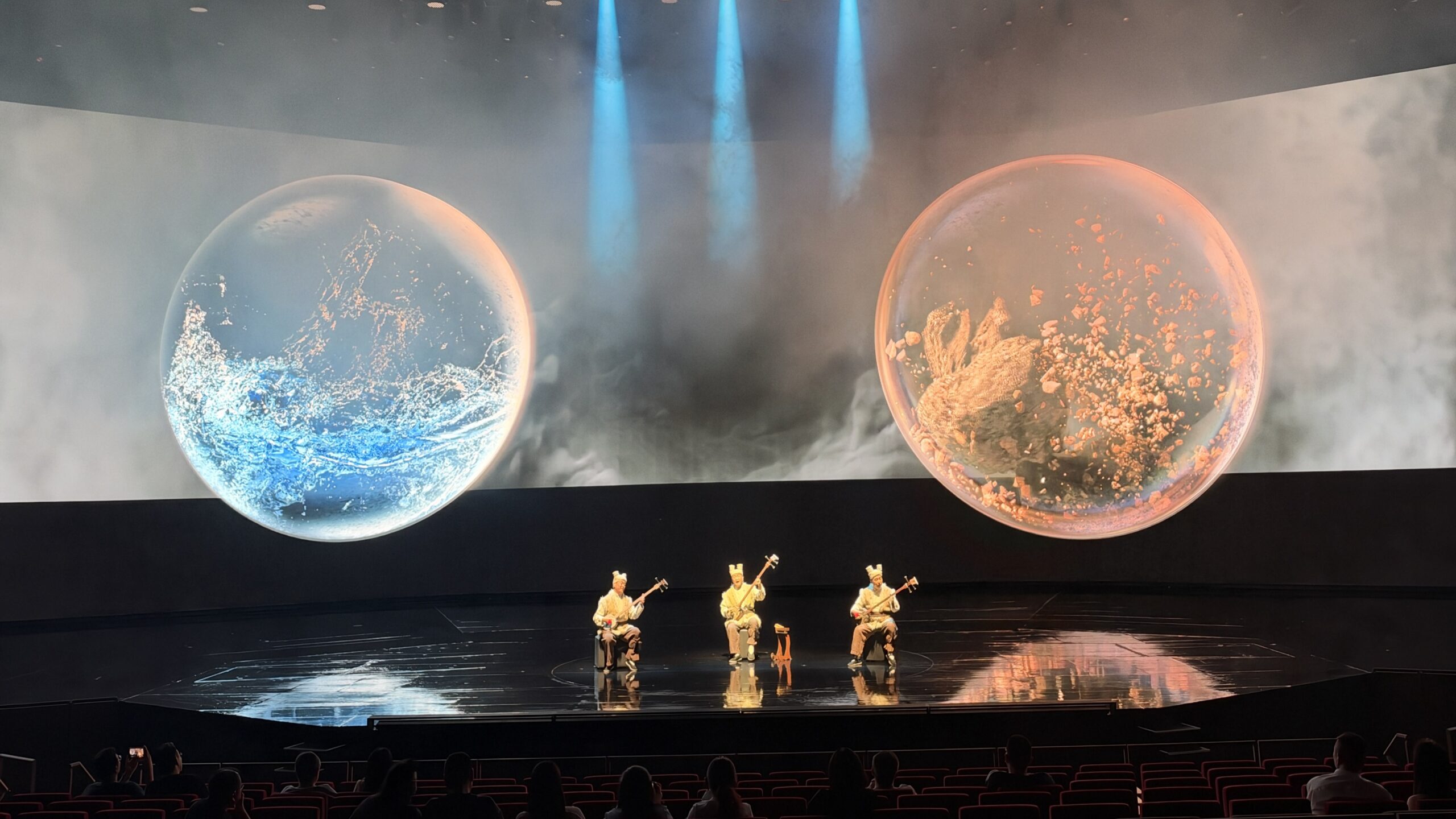
Discover MGM 2049, the spectacular residency show at MGM Cotai, Macau, directed by Zhang Yimou. An exclusive backstage look at the technology, robots, giant screens, flying creatures, and cultural heritage that make this one of Macau’s most unique attractions.
Indice
Italy in Macau would like to sincerely thank MGM for the opportunity to experience MGM 2049 and participate in an exclusive backstage tour. Watching the show is impressive. Discovering everything that happens behind the scenes makes it even more extraordinary.
MGM 2049 Review: Inside Macau’s Groundbreaking Residency Show at MGM Cotai
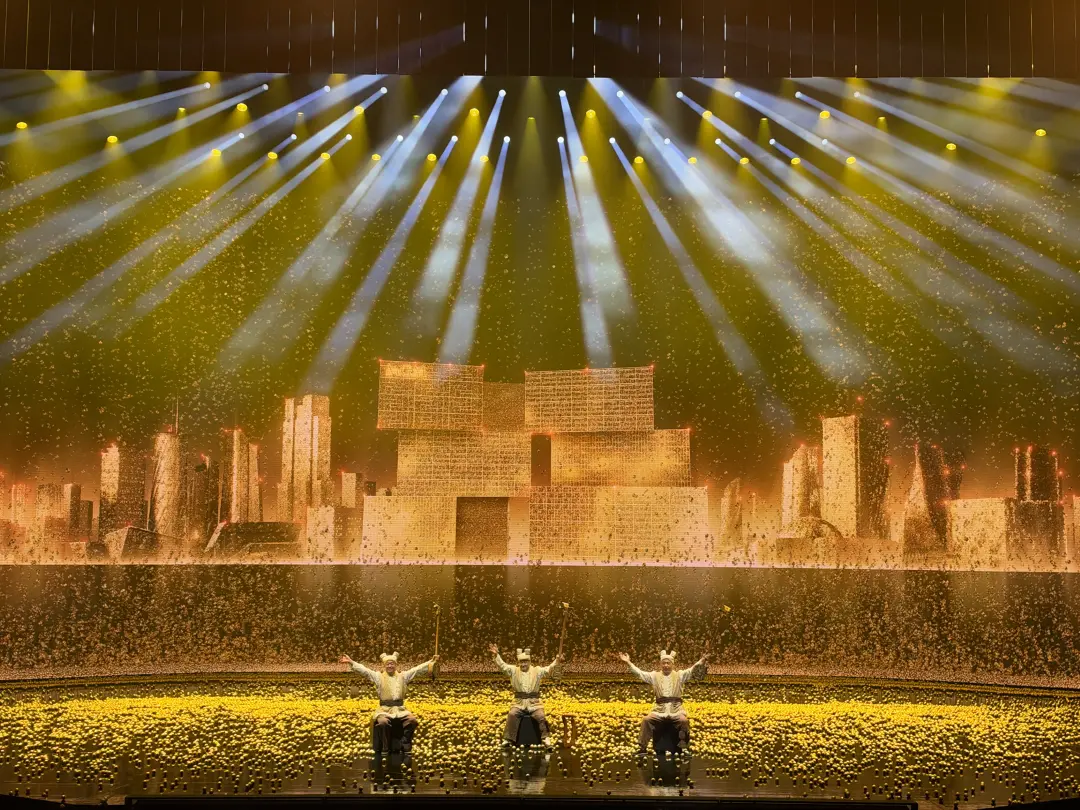
Macau has built a global reputation for entertainment. For years, visitors have travelled here to experience world-class concerts, major sporting events, luxury hospitality, and some of the most ambitious theatrical productions ever created.
Yet every now and then a new show arrives that feels different.
Not simply bigger.
Not simply more expensive.
But genuinely different.
MGM 2049, the permanent residency show at MGM Cotai directed by acclaimed filmmaker Zhang Yimou, belongs to that category.
The production has often been described as a fusion of Chinese cultural heritage and futuristic technology. While this description is accurate, it only tells part of the story. After attending the performance and exploring the backstage areas, we discovered that MGM 2049 is much more than a visual spectacle. It is an enormous technological ecosystem where hundreds of professionals, sophisticated engineering systems, advanced robotics, immersive digital environments, performers, artists e technicians work together with remarkable precision.
For the audience, everything appears effortless.
Behind the curtain, however, lies a level of preparation that is almost as fascinating as the performance itself.
The Theater Is Not Just a Venue. It Is Part of the Performance
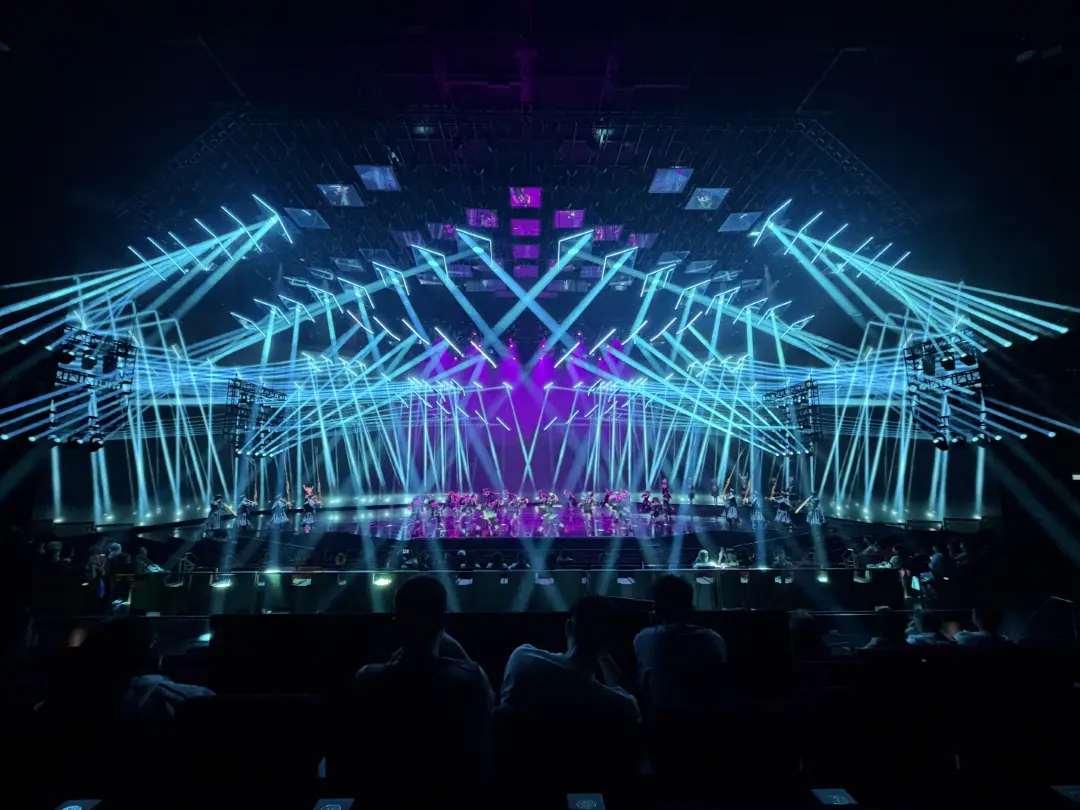
Perhaps the most surprising discovery during the backstage tour was understanding how important the il MGM Theater itself is to the entire production.
Most theaters are designed around a relatively fixed concept. The stage has defined dimensions, backstage areas remain backstage areas, and productions must adapt themselves to those limitations.
The MGM Theater works differently.
The entire venue was conceived as a dynamic performance environment capable of changing configuration according to the artistic needs of the production.
The stage can be expanded or reduced depending on the requirements of individual scenes. Space normally allocated to backstage operations can become active performance space. At other times, the visible stage area can become more intimate, encouraging spectators to focus attention on a smaller section where crucial action is taking place.
This flexibility allows the creative team to control perspective in ways rarely seen in traditional theater environments.
Sometimes the audience is confronted with a vast visual landscape stretching across enormous digital canvases.
Moments later, attention may be focused on a much smaller area where subtle choreography or storytelling unfolds.
Theater architecture becomes an active storytelling tool.
And in MGM 2049, it works brilliantly.
The Giant Screens Are Far More Sophisticated Than They Look
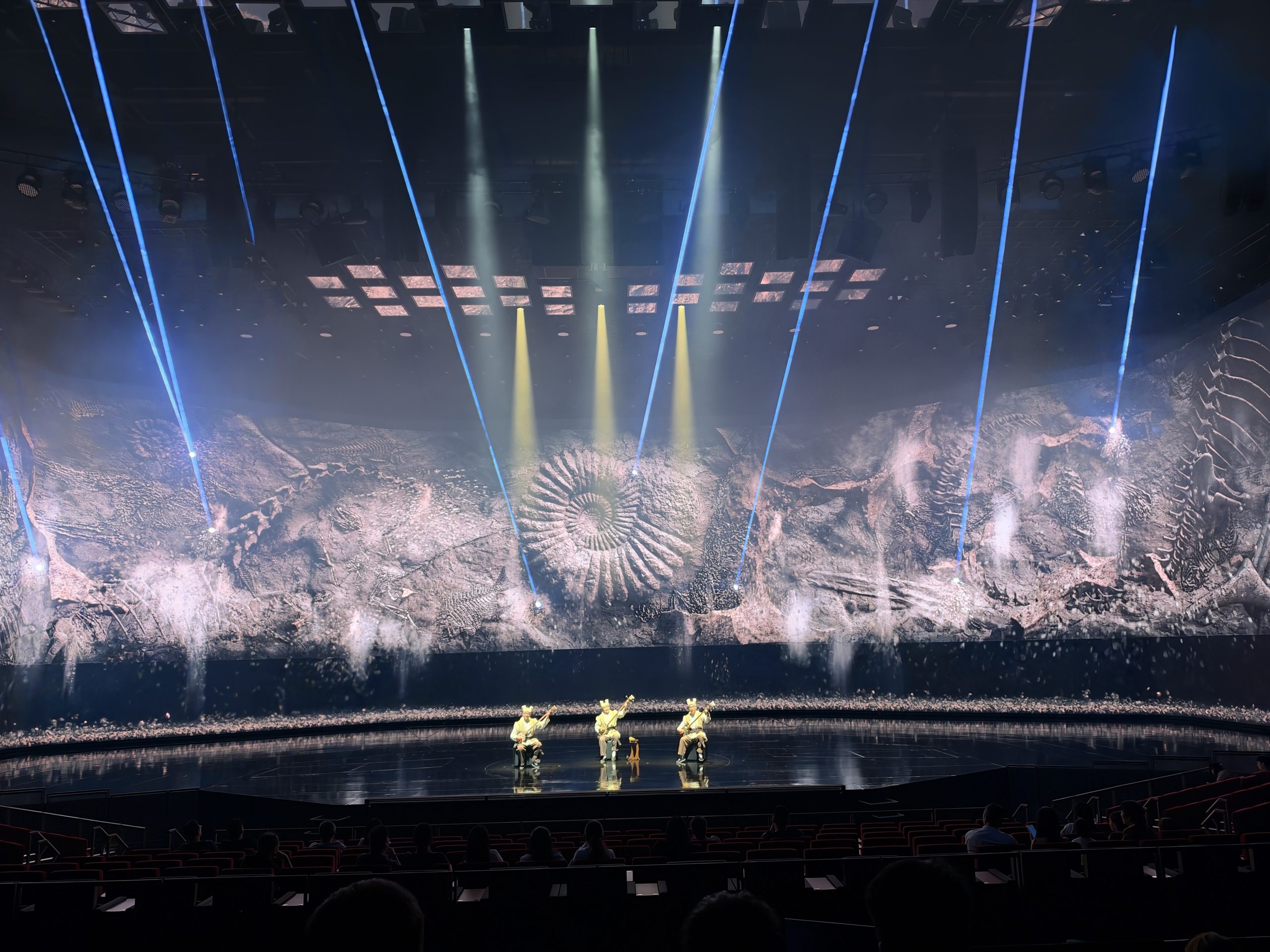
One of the immediate visual signatures of MGM 2049 is its massive digital environment.
The giant screens that dominate parts of the venue create unforgettable scenes, transforming the theater into abstract artistic worlds.
What many visitors may not realize is that the visuals displayed on these screens are not generic video content.
Every sequence has been specifically designed for those exact surfaces.
The dimensions, viewing angles, brightness levels, movement capabilities, and physical characteristics of the screens must all be considered during content creation.
This means visual artists cannot simply create a video and project it onto a giant display.
Instead, every scene is tailored to the physical and technical characteristics of the MGM Theater.
The result is extraordinary.
At various moments during the performance, the combination of giant screens, laser effects, lighting design, choreography and stage engineering creates visual illusions that appear to extend beyond the physical boundaries of the screens themselves.
Images seem to emerge from the digital world and enter the theater.
The distinction between physical space and virtual space begins to disappear.
The effect is difficult to describe but easy to appreciate.
It is one of the reasons why MGM 2049 often feels cinematic while remaining unmistakably live.
A Hidden Mystery Most Spectators Never Notice
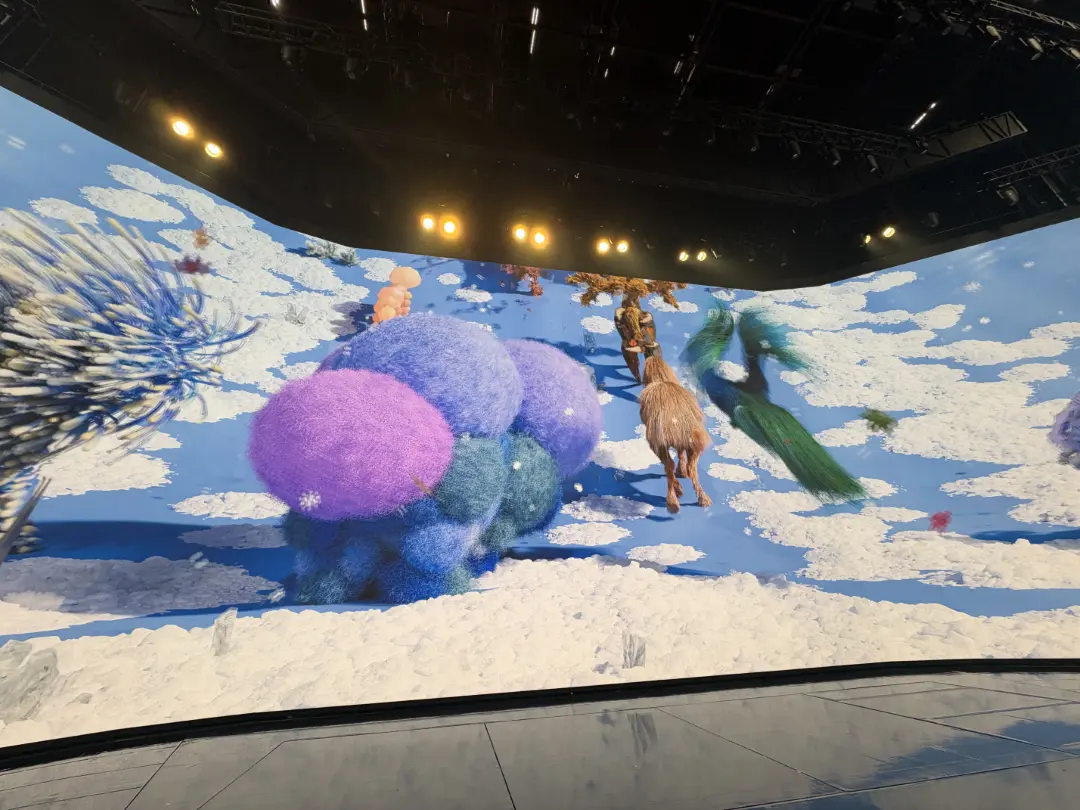
Among the many digital sequences featured throughout the show, one particular visual journey stood out to us.
It follows the changing beauty of nature through different seasons and landscapes, creating a poetic visual experience that many spectators naturally focus on.
Yet there is another layer.
If you watch carefully enough, you may notice a mysterious detail accompanying the natural elements.
Most people never see it.
Others spot it only briefly.
Once noticed, however, it becomes impossible to ignore.
We promised ourselves not to spoil the surprise.
Let’s simply say that it is not an animal.
It is red.
It moves quietly through the scene alongside the natural world.
Whether it was designed as a hidden artistic signature or a playful Easter egg for attentive viewers, it adds another reason to keep your eyes open during the performance.
Some mysteries are more enjoyable when left unsolved.
The Robots Are Incredible, But The Real Story Is How They Work
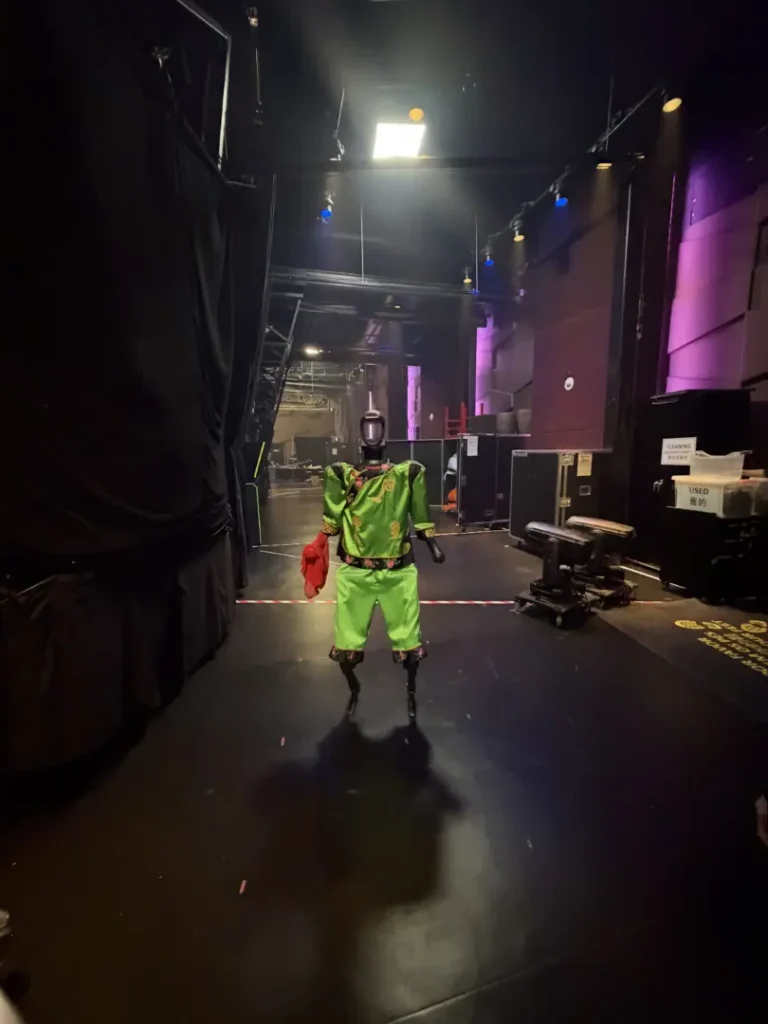
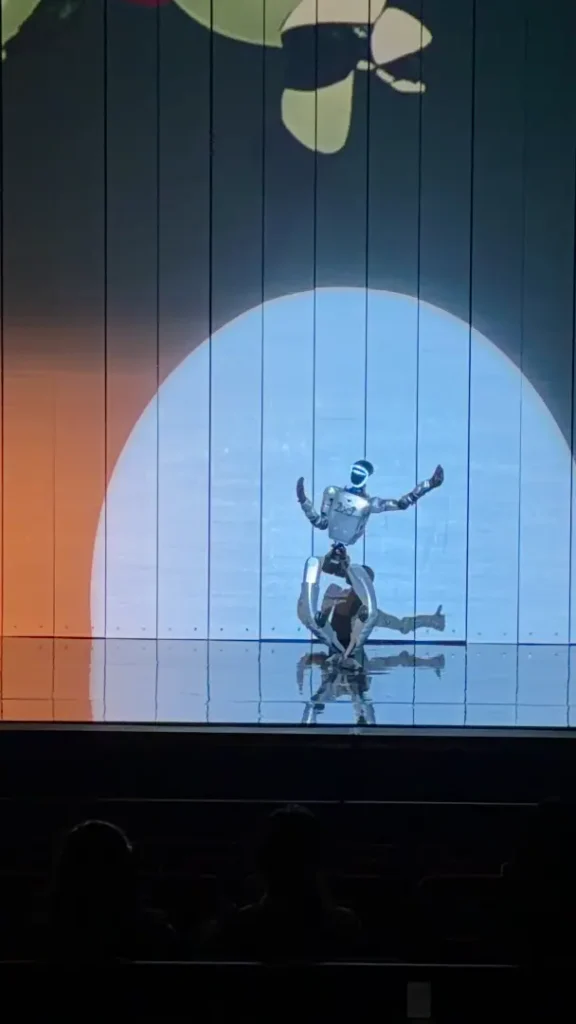
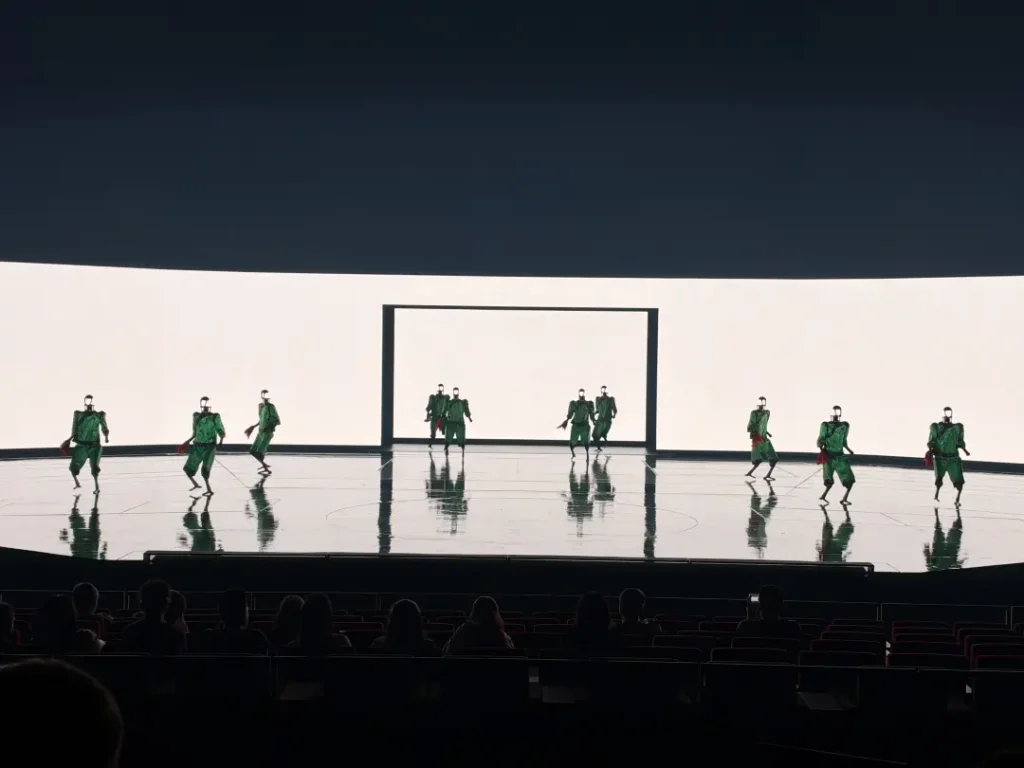
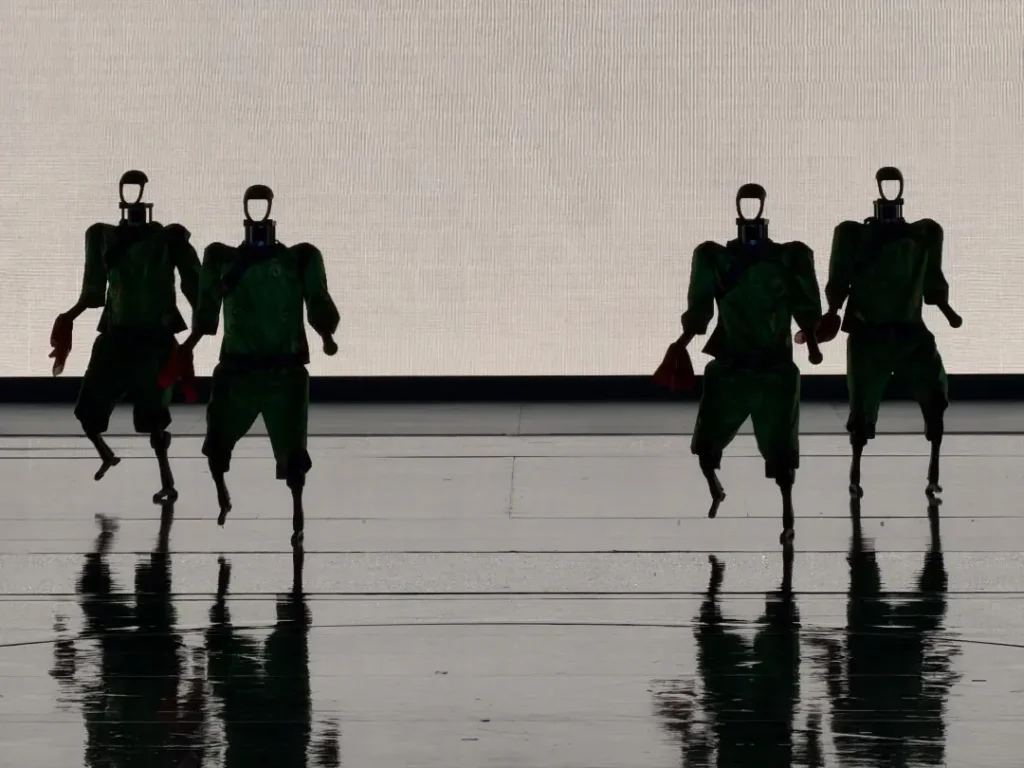
For many visitors, the robotic performances become one of the highlights of MGM 2049.
Watching machines move with such precision alongside human performers creates moments that feel almost futuristic.
What makes the scenes particularly impressive is that different robot models are used throughout the production.
Some of the latest-generation units display an astonishing level of mobility and balance.
Their movements increasingly resemble those of humans.
They can walk with confidence.
Change direction smoothly.
Maintain stability.
Synchronize with music.
And perform complex choreographic sequences.
However, the technology behind these moments is even more fascinating than the performance itself.
Contrary to what some people may imagine, the robots are not manually controlled throughout the show.
They are not remote-controlled performers.
Instead, their actions are programmed in advance through a highly sophisticated planning process.
Before performances begin, the robots scan and map their operating environment. Every position, movement path, distance, stopping point and interaction is predetermined.
In practical terms, this means the performance environment must remain extremely consistent. The stage has to be exactly as expected. Objects need to remain correctly positioned. Pathways must stay clear. Reference points must be respected.
This explains why backstage discipline at MGM 2049 is so important.
Every member of the production team contributes to maintaining a controlled environment.
Safety systems continuously monitor conditions and ensure appropriate distances between robots and performers.
Contingency procedures exist for unusual situations.
Yet according to the technical team, the consistency of operations ensures that these situations never become necessary.
It is a remarkable example of technology operating seamlessly within a live performance environment.
The Colored Stickers That Help Run the Entire Show
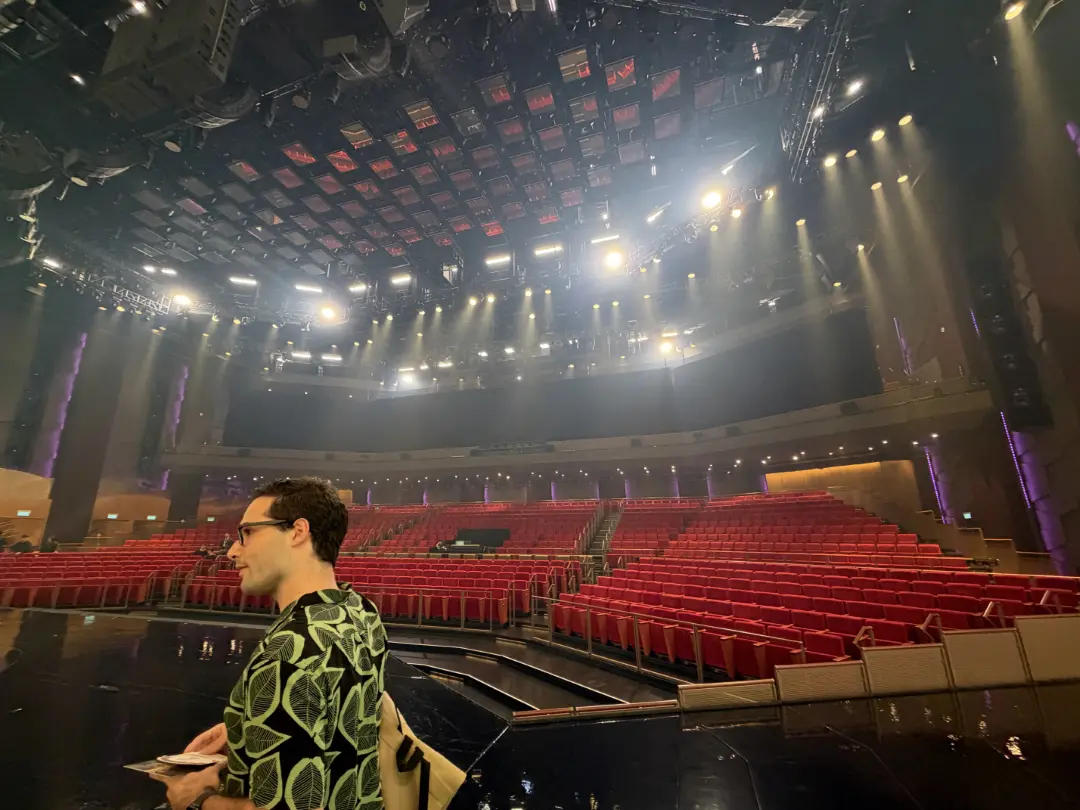
One of the most unexpected discoveries during the backstage tour was also one of the simplest.
Across parts of the stage floor, small coloured markers can be found in carefully selected positions.
The audience never notices them.
Yet they play an essential role.
Each set of stickers corresponds to specific acts and technical requirements.
Different colours help identify different positioning references.
Actors use them.
Stagehands use them.
Technicians use them.
Furniture and scenic elements are aligned using them.
Complex movements are coordinated around them.
When hundreds of actions must happen with exact timing, even small positioning errors can create significant problems.
These humble pieces of coloured tape demonstrate an important truth about major productions.
Success does not depend solely on cutting-edge technology.
It also depends on organization, preparation and attention to detail.
Sometimes the smallest backstage elements help create the biggest onstage moments.
Flying Sea Creatures Require Remarkable Skill
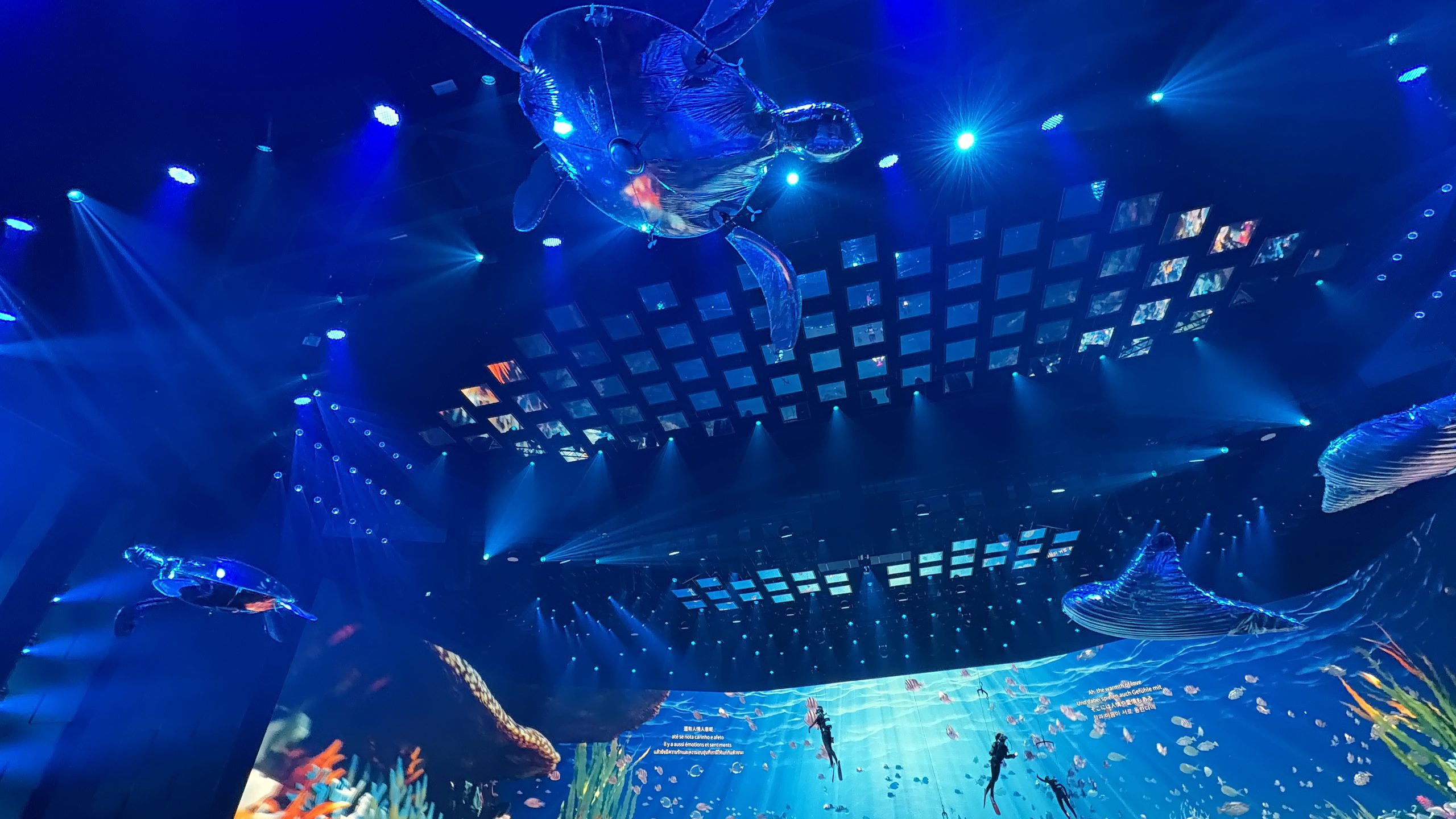
One of the most magical segments of MGM 2049 involves giant sea creatures floating gracefully above the audience.
Children immediately point towards them.
Adults instinctively reach for their phones.
From their seats, spectators often assume the creatures simply float through the venue under automated control.
The reality is much more complex.
These aerial creatures are remotely guided by highly trained operators.
Controlling them requires concentration, precision and substantial experience.
Numerous variables can influence their movement, including airflow conditions, visibility, timing, interactions with performers and overall stage coordination.
What appears graceful and effortless from the audience perspective is actually the result of significant technical expertise.
Witnessing the operational side of these sequences creates an even greater appreciation for what happens during the performance.
The illusion may be magical.
The professionalism behind it certainly is.
Light, Lasers and Shadows Become Storytelling Tools
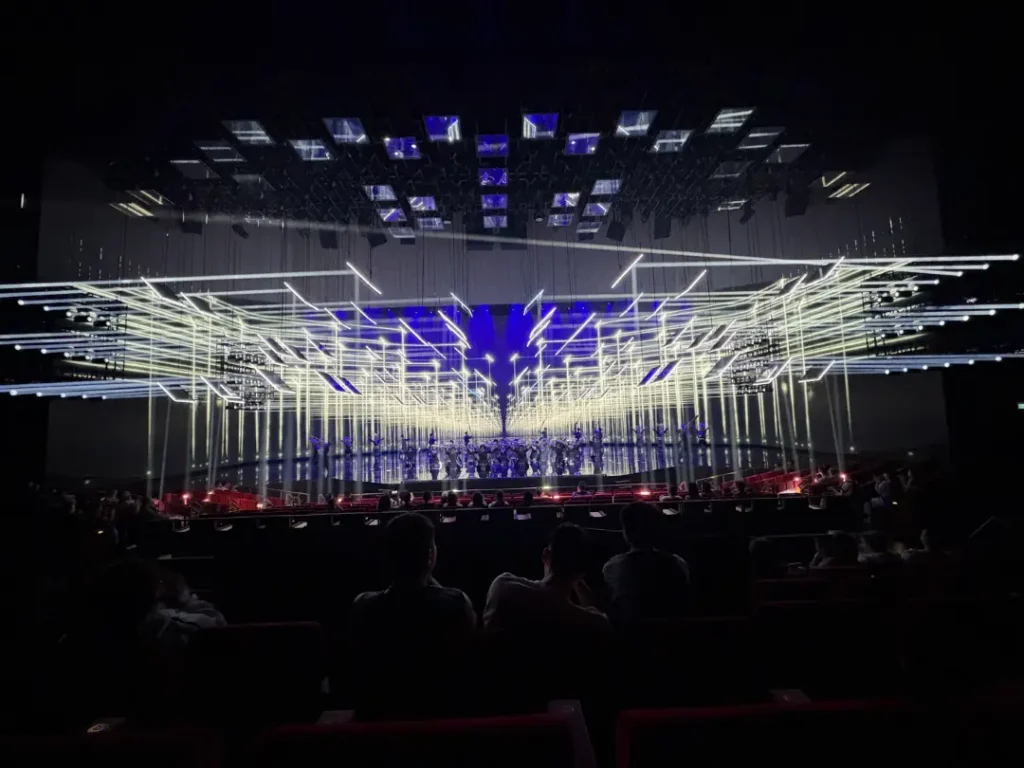
Many modern productions use lasers.
Many use impressive lighting systems.
Many rely on digital effects.
What distinguishes MGM 2049 is the way these technologies are integrated into the storytelling itself.
Throughout the performance, lasers create structures that seem to reshape space.
Shadows evolve into living artistic elements.
Reflections create optical illusions.
Light transforms physical architecture.
Digital imagery interacts directly with performers.
None of these technologies feel separate from the performance.
They become part of a single artistic language.
This seamless integration is one of the show’s greatest achievements.
Technology never appears to exist merely for spectacle.
Instead, it supports emotion.
Supports narrative.
Supports culture.
And ultimately supports the audience experience.
Preserving Culture Through Innovation
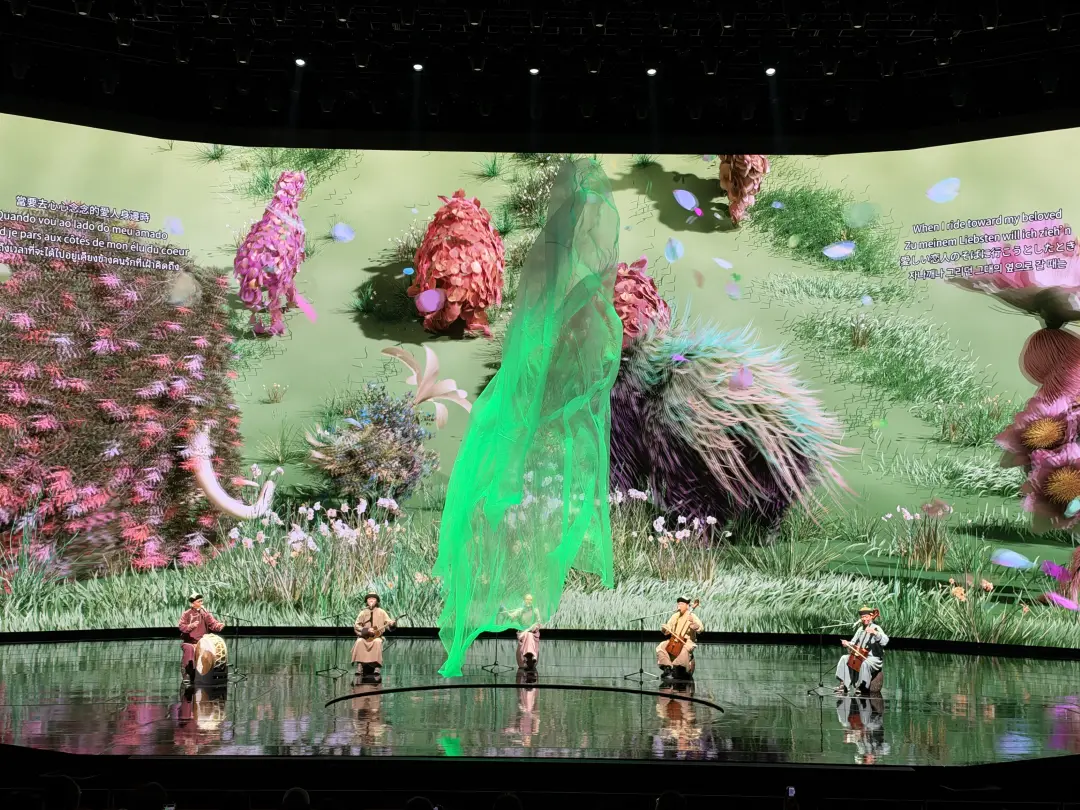
At its heart, MGM 2049 is not actually a technology show.
It is a cultural show.
Technology simply provides a new language through which culture can be experienced.
This is perhaps the most important aspect of the entire production.
Many traditional artistic forms around the world face a common challenge.
How do we preserve heritage while remaining relevant to younger generations?
MGM 2049 proposes an intriguing answer.
Traditional songs interact with digital environments.
Ancient storytelling traditions coexist with artificial intelligence.
Historic performance techniques share the stage with robotics.
The result respects cultural authenticity while embracing contemporary creative possibilities.
Rather than placing heritage behind museum glass, the production allows it to evolve.
That approach makes Chinese intangible cultural heritage accessible not only to local audiences but also to international visitors who may have little prior exposure to these traditions.
Reimagining The Lion Dance Finale
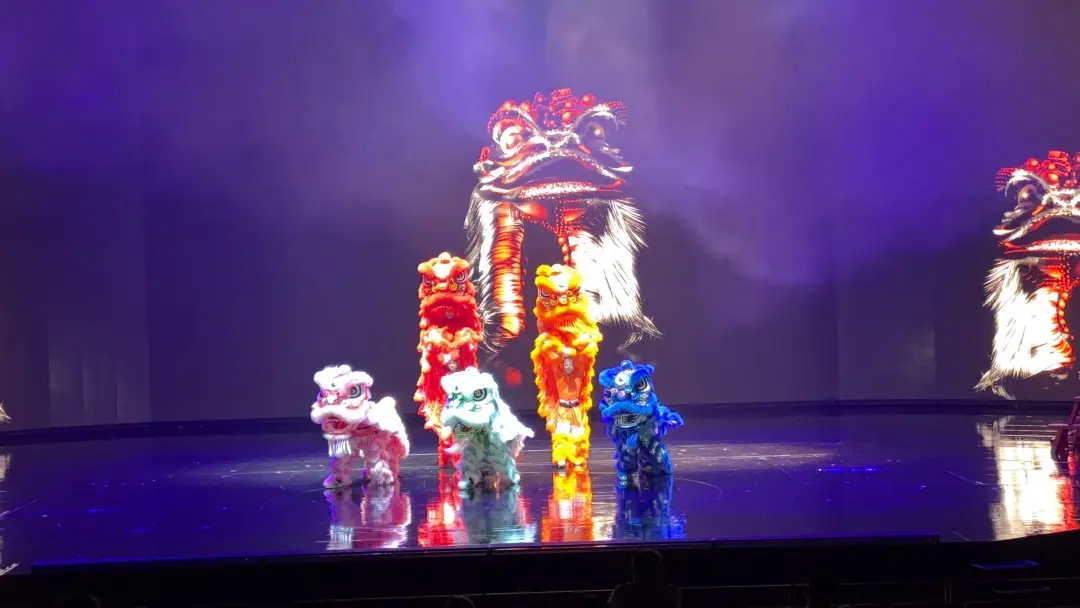
The finale deserves special recognition.
The lion dance sequence is among the most memorable moments of the show.
Yet its success comes from the decision not to simply recreate a traditional performance.
The creative team chose instead to reinterpret it.
Traditional elements remain visible and recognizable.
But they are fused with contemporary music, modern stage aesthetics, advanced lighting techniques and cutting-edge visual design.
The result feels fresh without abandoning its cultural roots.
That balance is difficult to achieve.
Too much modernization risks losing authenticity.
Too much tradition risks limiting innovation.
MGM 2049 manages to navigate both challenges with remarkable confidence.
The finale feels celebratory, emotional and distinctly modern.
It also perfectly summarizes the production’s broader message.
The future and the past do not need to compete.
They can coexist.
Why MGM 2049 Is Unlike Any Other Show In Macau
Macau offers no shortage of entertainment options.
Visitors can enjoy concerts, performances, attractions and world-class shows throughout the city.
Yet MGM 2049 occupies a unique position within the local entertainment landscape.
It is not a musical.
It is not a circus.
It is not a traditional theatrical drama.
And it is not simply a technology showcase.
Instead, it represents something increasingly rare: a genuinely original concept.
Culture, engineering, digital art, robotics, visual storytelling, traditional performance and innovation all coexist as equal partners.
The show demonstrates what becomes possible when artistic ambition is supported by significant investment, technological vision and creative courage.
For tourists looking for a uniquely Macau experience, MGM 2049 delivers something difficult to find elsewhere.
It celebrates Chinese culture without becoming conventional.
It embraces technology without becoming cold.
And it entertains while simultaneously inspiring curiosity.
Conclusione
Our backstage tour revealed an important lesson.
The true magic of MGM 2049 does not come from a single giant screen, a single robot, a single laser, or a single spectacular scene.
It comes from the extraordinary coordination of hundreds of people working together to create an experience that feels effortless.
Every lighting cue.
Every robot movement.
Every flying sea creature.
Every visual sequence.
Every performer position.
Every backstage marker.
Every technical adjustment.
Together they create one of the most fascinating entertainment experiences currently available in Macau.
MGM 2049 is more than a residency show.
It is a glimpse into the future of live entertainment.
A future where technology enhances culture rather than replacing it.
And after seeing both the public performance and the hidden world behind the curtain, we can confidently say that the backstage story is every bit as fascinating as the show itself.
FAQ
What makes MGM 2049 different from other residency shows in Macau?
Unlike most residency productions that focus primarily on acrobatics, music, or theatrical storytelling, MGM 2049 combines Chinese intangible cultural heritage with advanced technologies such as robotics, giant LED environments, kinetic staging, immersive lighting systems, and AI-assisted visual experiences. The result is a production that feels equally cultural, artistic, and futuristic.
Do the robots in MGM 2049 perform live or are they remotely controlled?
The robots perform using pre-programmed movement sequences that have been meticulously tested and synchronized with the live show. Before performances, they map and verify their environment to ensure every movement can be executed safely and accurately. This allows them to interact with the stage in a remarkably natural way while maintaining strict safety standards.
How long is MGM 2049?
The show lasts approximately 80 minutes and is performed without interruption. The pacing is intentionally designed to create a continuous journey through different cultural and technological worlds rather than separating the experience into traditional theatrical acts.
Is MGM 2049 suitable for children?
Yes. While adults will appreciate the technological innovation and cultural references, children are often captivated by the visual effects, robots, giant digital landscapes, flying sea creatures, dynamic lighting effects, and larger-than-life stage elements. The show can therefore be enjoyed by multiple generations for different reasons.
Do you need to understand Chinese culture to enjoy MGM 2049?
Not at all. The production is designed to be visually intuitive and emotionally accessible even for international audiences. While viewers familiar with Chinese traditions may recognize specific cultural references, newcomers can still fully appreciate the artistic performances, visuals, music, and storytelling without prior knowledge.
Is there really a hidden Easter egg in MGM 2049?
Yes. During the nature-themed sequence featuring changing landscapes and seasons, a small red figure appears moving across the digital environment. It is easy to miss because the audience is naturally focused on the larger scenery.
We won’t reveal exactly what it is, but once you spot it, you’ll likely spend the rest of the scene keeping an eye on it. Consider it a fun challenge for attentive viewers.

Andrea Pimpini ha un BBA in Economia e Management dall' Università di Chieti-Pescara. Si è trasferito a Macao nel 2024, definendola la sua “nuova casa” e, dopo alcune esperienze lavorative in città, è attualmente studente del corso di laurea magistrale in International Integrated Resort Management all' Università di Macao Andrea ha vinto varie borse di studio erasmus+ e ottenuto certificazioni da CERGE-EI Foundation.
. Andrea Pimpini è assistente di ricerca e studente magistrale in International Integrated Resort Management presso l’Università di Macao. La sua ricerca si concentra sulla diversificazione del turismo, le strategie di ospitalità e il branding culturale in Asia. Ha pubblicato commenti su gaming e turismo in testate internazionali e attualmente esplora l’intersezione tra benessere, tecnologia e resort integrati a Macao.